Promote product launches, funding news, and innovations in 75+ countries by reaching top tech journalists and global publications.
Drive international attention to destinations, campaigns, and services by distributing news to relevant travel and lifestyle media worldwide.
Increase visibility of new products, campaigns, and brand stories by connecting with influential retail and consumer-focused media outlets.
Strengthen your crypto brand’s credibility through targeted PR in tech, finance, and blockchain media across global markets.
Expand your agency’s services with global PR distribution in 75+ countries, featuring guaranteed coverage, localized press releases, and white-label reporting for your clients.
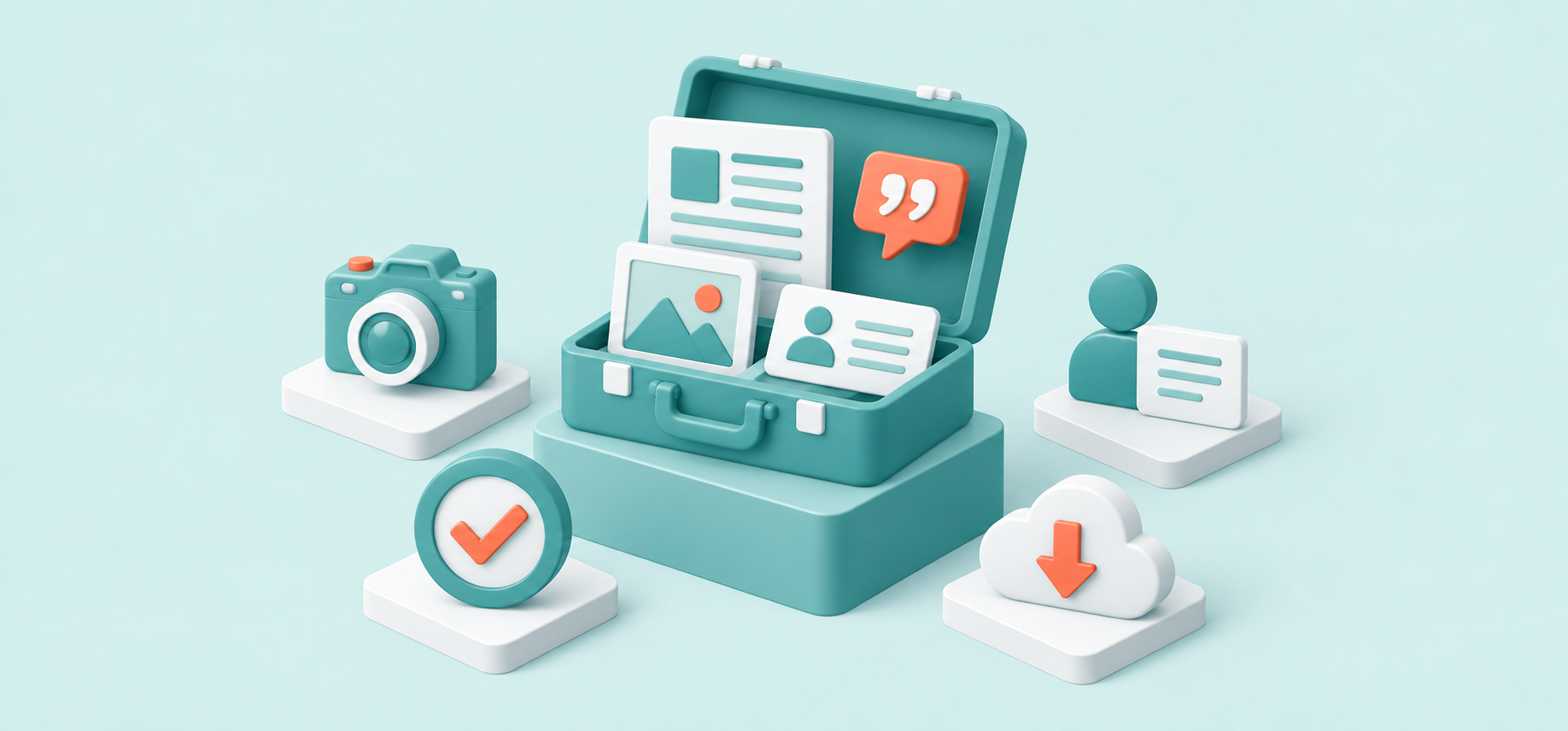
A press kit is a collection of verified information and downloadable assets prepared for journalists, editors, and other media professionals. It gives them the facts, quotes, images, background, and contact details they need to cover a company, product, event, or announcement accurately.
The purpose is simple: reduce the work between discovering a story and publishing it. A journalist should not need to search several web pages, request a usable logo, or wait for basic facts. Everything relevant should be easy to find, current, and ready to use.
A strong press kit is not a sales brochure. It is a practical media resource built around clarity, proof, and access.
What Does a Press Kit Help Journalists Do?
A useful press kit allows a journalist to complete four tasks without unnecessary delays.
Task
What the press kit provides
Understand
A clear summary of the company and the story
Verify
Accurate facts, dates, figures, names, and supporting sources
Download
Logos, photographs, videos, charts, and documents in usable formats
Contact
A named media contact who can answer questions quickly
This four part test is more important than the number of files in the kit. A large folder can still be ineffective if the information is unclear, outdated, or difficult to use.
What Should a Press Kit Include?
The contents of a press kit depend on its purpose, but most company press kits should contain the following materials.
Company Overview and Fact Sheet
Start with a short company description and a fact sheet. Include the official company name, location, founding year, leadership, products or services, key markets, important figures, and a plain explanation of what the business does.
Keep these facts consistent with the company website and other public profiles. Journalists should be able to quote the information without resolving conflicting versions.
Current Press Release
If the kit supports an announcement, include the approved press release. It should explain what happened, who is involved, why the development matters, and when it takes effect.
Provide the release as a web page or editable document, not only as an image. If the announcement still needs editorial preparation, B2Press offers press release content support for material intended for media distribution.
Executive Biographies and Approved Quotes
Include concise biographies for the people relevant to the story. State each person’s full name, title, experience, and role in the announcement.
Approved quotes can help journalists understand the company’s reasoning, but they should add substance. A useful quote explains a decision, gives context, addresses an industry issue, or states what happens next.
Logos, Photographs, and Video
Provide logos in common formats with clear versions for light and dark backgrounds. Add high resolution photographs of products, locations, events, and relevant executives.
Every image should include a caption, the names of people shown, a credit, and any use restrictions. Video files or footage should also have a short description so journalists know what they are downloading.
Product, Event, or Research Information
Add the details that are specific to the story. A product launch kit may include specifications and pricing. An event kit may include the schedule, speakers, and venue information. A research kit should include the report, methodology, sample size, and charts.
Do not make journalists guess which version is current. Show dates and version information clearly.
Supporting Evidence
Claims become more useful when they are supported by sources. Include research documents, certifications, regulatory information, customer results, or links to public records when they are relevant and approved for publication.
Separate verified facts from company opinions. This makes the material easier to assess and reduces the risk of inaccurate coverage.
Media Contact Details
Name a person who can respond to media enquiries. Include an email address, phone number, location, working hours, and an alternative contact when the story is urgent.
A general contact form is not enough for time sensitive media requests. Journalists need to know who is responsible and when they can expect a reply.
Press Kit vs Media Kit vs Press Release
Press kit and media kit are often used as the same term, but some organizations make a practical distinction. A press release is different from both because it is one announcement, not a collection of resources.
Present broader brand, audience, or partnership information
Company profile, audience data, reach, case studies, advertising options
Media, partners, advertisers, and creators
Press release
Announce one newsworthy development
Headline, lead, supporting facts, quote, company information, contact
Journalists, media outlets, and stakeholders
In practice, many companies call their permanent online resource a media kit or press kit. The label matters less than the purpose. If the page is intended for journalists, it should prioritize accurate facts and usable press materials rather than marketing claims.
When Does a Company Need a Press Kit?
A company should prepare a press kit when journalists are likely to need more information than one press release can provide.
Common situations include:
Launching a product or service
Announcing funding, an acquisition, or market expansion
Publishing original research or a major report
Hosting a conference, media event, or product demonstration
Introducing a new chief executive or senior spokesperson
Responding to strong or unexpected media interest
Building a permanent online newsroom for future enquiries
Small businesses and startups do not need a large corporate library. A focused kit with accurate facts, a useful story, a logo, several strong images, and a responsive contact can be enough.
How to Create a Digital Press Kit
1. Define the Media Use Case
Decide whether the kit supports one announcement or provides permanent company information. A launch kit needs product facts and images, while a research kit needs methodology, data, charts, and expert contacts.
2. Gather and Verify the Information
Collect company facts, biographies, claims, dates, quotes, and supporting documents. Confirm names, titles, figures, spellings, and approvals before publication.
3. Prepare Usable Media Assets
Offer photographs and logos as separate downloads. Use descriptive file names, add captions and credits, and provide enough resolution for digital and print use. Do not place every asset inside one PDF.
4. Organize the Kit Around Journalist Tasks
Put the story summary and key facts first. Group images, biographies, research, past releases, and contact details under clear labels. A visitor should understand the contents without opening every file.
5. Make Access Simple
Host the kit on a public web page or in a folder with reliable permissions. Avoid account requirements, lead forms, expiring links, and download barriers. Test the page on desktop and mobile devices.
6. Assign an Owner and Update Schedule
Choose one person or team to maintain the kit. Review it after leadership changes, product updates, new research, rebranding, or major announcements. Remove outdated files rather than leaving several competing versions online.
Digital Press Kit Checklist
Before sharing the kit, confirm that a journalist can answer yes to each question.
Can I understand the company and the story within one minute?
Can I verify the important names, dates, figures, and claims?
Can I copy approved text without extracting it from an image?
Can I download each logo, photograph, chart, or video separately?
Does every visual include a clear caption, credit, and use guidance?
Can I identify the newest version of every document?
Can I reach a named media contact without completing a form?
If any answer is no, the press kit still creates work for the journalist.
Common Press Kit Mistakes
The most common press kit mistakes are excessive promotion, missing evidence, old facts, inaccessible files, unclear image rights, and absent contact details. Another frequent problem is treating design as more important than usability.
A polished PDF may look professional but becomes frustrating when journalists cannot copy text or download individual images. A public folder may be convenient but confusing when file names are vague and several versions appear current. The best press kit is usually the one that answers questions fastest.
How a Press Kit Supports Media Distribution
A press kit does not create news value and does not replace outreach. It supports a valid story by giving journalists the material needed to assess and cover it.
When a company plans international outreach, its press kit can support global media reach by giving different markets access to approved facts and localized assets. The kit should be reviewed alongside the release so names, figures, quotes, and claims remain consistent.
B2Press helps companies combine prepared media materials with targeted press release distribution across selected markets. After publication, media monitoring shows where the release appeared and helps teams understand which information and assets supported coverage.
If your press release and supporting materials are ready, you can submit your press release and choose the market and distribution scope that match the story.
Frequently Asked Questions About Press Kits
What is the purpose of a press kit?
The purpose of a press kit is to give journalists accurate information and usable assets in one place. It helps them understand a story, verify important facts, download approved materials, and contact the right person without unnecessary delays.
What should a press kit include?
A press kit should include a company overview, fact sheet, relevant press release, executive biographies, approved quotes, logos, photographs, supporting documents, and media contact details. The exact contents should match the company, story, event, product, or research being covered.
Is a press kit the same as a media kit?
The terms are often used interchangeably. When a distinction is made, a press kit is usually designed for journalists covering a company or announcement, while a media kit may also include audience data, advertising information, partnership options, and broader brand material.
What is the difference between a press kit and a press release?
A press release communicates one newsworthy development in a standard editorial format. A press kit is a collection of supporting resources that may include the press release together with facts, biographies, images, documents, quotes, and media contact information.
Do small businesses need a press kit?
Small businesses need a press kit when they seek media coverage or receive regular press enquiries. The kit can be simple. Accurate company facts, a short profile, a logo, several useful images, relevant announcement material, and a responsive contact are often enough.
Should a press kit be a PDF or a web page?
A web page is usually easier to update, search, and share. A PDF can provide a convenient summary, but logos, photographs, videos, and editable text should also be available as separate downloads. Many companies use both formats for different needs.
How often should a press kit be updated?
Review a press kit after leadership changes, product launches, funding news, new research, rebranding, or changes to company facts and contact details. A scheduled review every few months also helps identify broken links, expired permissions, and outdated assets.